Listed below are the main types of outdoor furniture :
Wood - hardwoods like Kwila, and Teak
Kwila furniture is usually well priced. It is a durable tropical hardwood usually sourced from South East Asia or some Pacific Islands. New Kwila has natural colour in the wood that bleeds out over time. Take care to avoid ground staining - especially on unsealed surfaces.
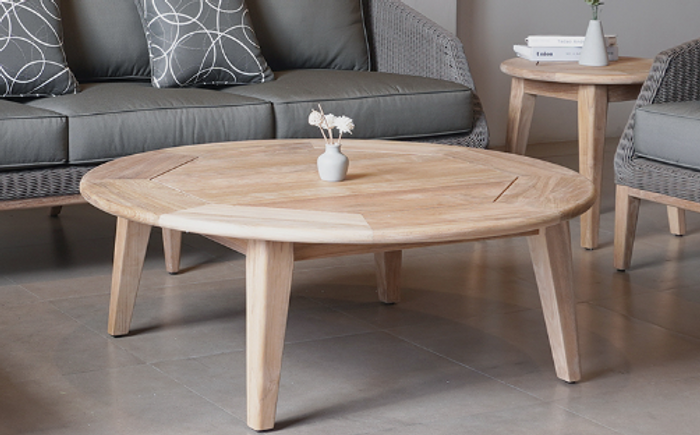
Teak wood (or golden teak) is one of the very best woods for outdoor furniture. It is a hardwood timber with a natural waxiness (due to its high level of oils) which gives it outstanding durability and stability. It is, after all, the wood of choice for boats - both on deck and inside. Ever seen a kwila deck on a boat ?
There is an abundance of teak furniture, ranging from very cheap to extremely expensive. Inferior teak will have knots in the grain and will come from the outer part of the tree trunk. Imperfections and splitting may be apparent. Most often, it is pale in colour.
High quality teak, in contrast, will come from the centre of the tree trunk and is characterised by beautiful grain, virtually free of knots and imperfections. It will have a warm rich golden colour and hue. In Europe, the desirable properties of high quality teak furniture are universally recognised, and there is a huge market for premium quality teak furniture.

Proper teak as we know it is called Tectona Grandis. It is most often sourced from South East Asia.
Note. Do not confuse Pacific teak with Tectona Grandis. It is a totally different species of timber.
Over time, most woods turn to a natural grey finish. The original colour can usually be restored throug application of a suitable furniture oil. Furniture oil can also be applied to new timber to slow down the greying process.
Aluminium
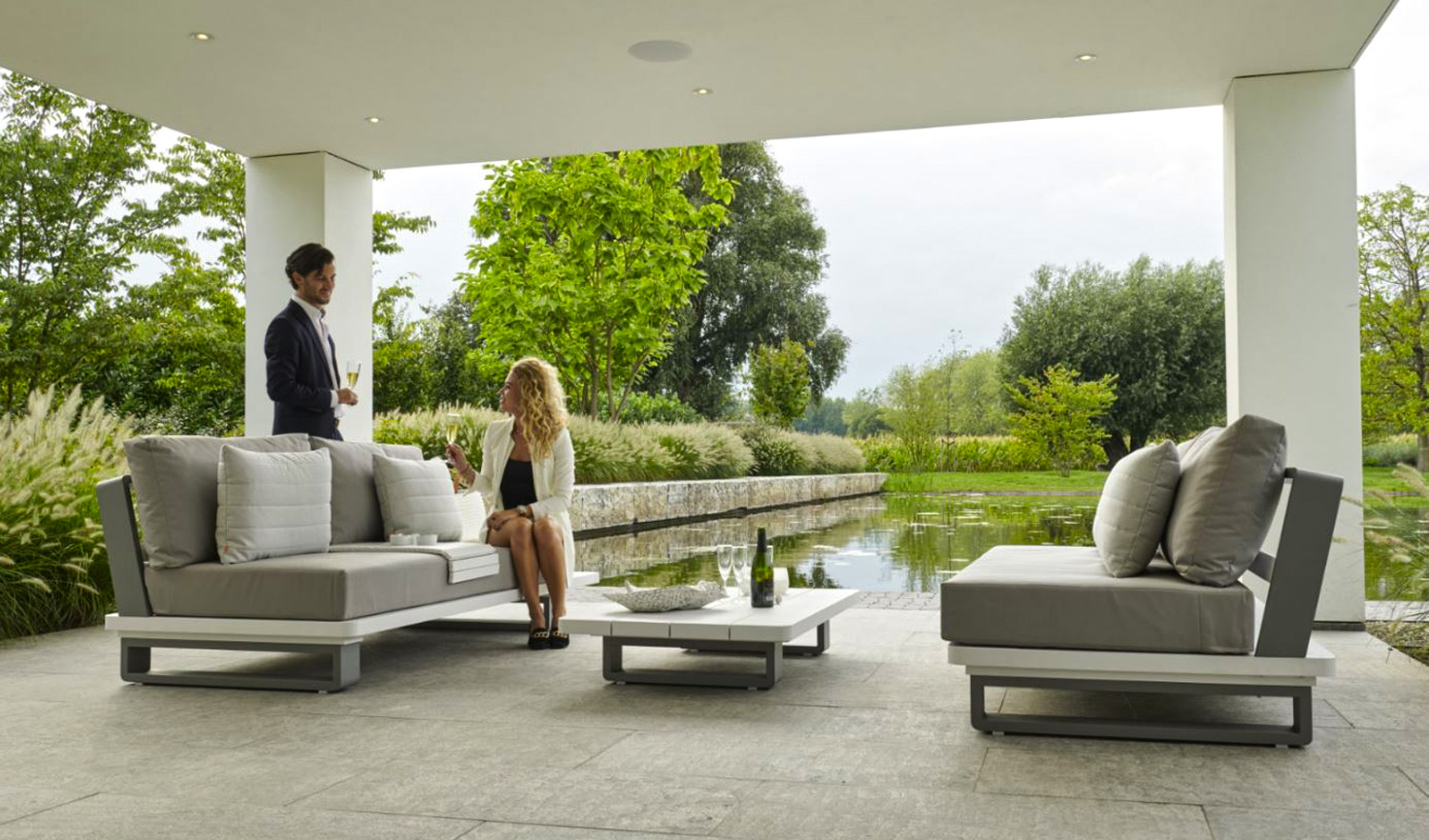
Aluminium is almost an ideal metal for outdoor furniture as it cannot rust, is lightweight and is usually durable. It's light weight needs to be considered where it may be exposed to high winds.
Aluminium furniture should be finished in a high quality powder-coat finish as this acts as an anti-corrosive barrier and also a tough surface, resistant to knocks.
Aluminium furniture can be ideal for seaside use due to it's inability to rust.
Sling
Sling material is often used as the seat base for chairs and sunloungers. Most slings are made from a woven PVC coated polyester fabric which is suited to outdoor conditions due to its rot-proof quality.
There are many brands of sling, of which Textilene is the most recognised.
High quality slings will have 100% memory, meaning that they will always return to their original tautness. They are also colour fast and have an attarctive appearance.
Cheaper slings may permanently stretch over time and show signs of colour change.
Stainless steel
Stainless steel is perhaps the strongest material for outdoor furniture, yet it is possibly the least understood. The general perception is that stainless steel furniture needs little or no care to maintain its appearance.
In fact, most stainless steel comes in 304 grade and the higher marine 316 grade. And yet, there are varying qualities within these grades due to impurities and nickel content.
Stainless steel also comes in various finishes - natural, brushed, polished, electropolished and pearl blasted. Electropolished stainless steel is a special process that improves durability. Pearl blasting is a pleasant micro bead finish.
Stainless steel has a tendency for a tea staining appearancee as contaminants oxidise on its surface. This is a surface rust that forms within it's microscopic surface cavities.
On cheaper stainless steel, this cannot be easily removed and permanent tea stainig can result which is unsightly. On higher grade stainless steel, this surface staining can still develop, but upon cleaning it will disappear completely. Electropolished stainless steel adds that furthr level of protection by changing teh surface structure of stainless steel, minimising the chance of staining.
With all stainless steel, regular maintenance is the key to maintaining an attractive appearance.
Synthetic wicker / rattan
This type of furniture is quite new. Synthetic wicker made to look like natural rattan type finishes is usually woven around a metal frame, stretched tight to form a tight woven surface.
There are many quality variations. Cheaper PVC wicker typically only has a coloured surface. Scuffs will highlight a different coloured core.
Polyethylene wicker usually has colour running right through it, and it is capable of being very colour fast and strong.
Quality synthetic wicker has excellent memory characteristics (resistantt to permanent stretching over time), colour stability that should not fade over many years and a delightful visual appearance. Often the colours running through the fiber has mutiple colour tones to look natural and appealing.
The wicker can come in many thicknesses, from spaghetti like wocker to thick straps.
An aluminium frame is generally better than a steel frame. Some steek frames are perfectly fine if they have been treated with a galvanic and powdercoating process for protection.
Quality weaving is generally recognised by a very tight weave with very few visible holes and tidy wicker terminations. Press the wicker and see how much give there is. A firm, tight weave is an indication of quality.
Concrete
Concrete furniture is heavy! This can be great if you want furniture that will not get blown around, or as a deterrent for thieves. But concrete furniture usually requires many people to carry it to site and set up.
Concrete is also very porous and sealing the furniture with a concrete sealer is recommended, although this usually changes it's visual appearance.
Usually the furniture is set up on pedestals, and may need to be levelled to stop "rocking". This means that furniture is not really portable and once set up it is not practical to move it.
Lightweight concrete furniture is a new category. Essentially, it is still concrete, but the weight is reduced, either through the use of a fiberglass substrate, or the addition of fiberglass strands in to the concrete to strengthen it. The result is lightweight concrete furniture.
Fiberglass
Not so common, and usually expensive. Fiberglass furniture is usually moulded to from a shape. It is hardwearing and has high colourfastness. Usually used for exotic furniture designs.
Plastic
Typically this is outdoor furniture made from polypropylene or polyethylene.
Sometimes fiberglass strands are added to further strengthen designs.
Plastic is hardwearing, available in an almost infinite choice of colours and mouldable in to a multitude of shapes.
Plastic outdoor furniture can range from economy furniture (including commercial furniture) to very expensive examples which may even have a lacquered fiinish.
Solid surface
This is a new material that is made from natural minerals bound with synthetic resin to form a highly durable material that can be moulded in to shapes. Solid surface are formed for chair seats and table tops. The material is resitant to scratching and staining and is naturally hygienic due to its density - bacteria cannot easily adhere to it. Scratches that form on this material can be lightly buffed off.
Its moderate weight makes it suitable for high wind areas.
PVC/nylon strap
Nylon/PVC strap is used as the seat base on chairs and is often called "spaghetti strings"
Try it for comfort, as sometimes the gap between teh strings can make the seat a littel uncomfortable. Also watch out for taughtness of the straps and longevity and colourfastness of the material.
Steel
Steel framed furniture is generally found at the economy end of outdoor furniture as it is a cheaper material than aluminium or stainless steel.
A quality protective coating is essential for longevity. Ideally a galvanizing protection layer followed by a powdercoat finish is preferred.
Make sure rain cannot enter inside the framework or this may accelerate rusting. Any holes, screws etc should be on the underside of the framework to avoid water ingress.