
Outdoor furniture is not as simple as choosing between timber and metal anymore. A single chair might have an aluminium frame, woven rope details and removable outdoor cushions. A dining table could combine teak with ceramic, or powder-coated aluminium with an HPL top.
That is part of what makes choosing outdoor furniture interesting, but it can also make it hard to know where to start. The best material for your home will depend on how your outdoor area is used, how exposed it is and how much care you are happy to give it over time.
New Zealand weather plays a part too. Strong sun, rain, wind, salt air and damp winters can all affect furniture differently. There is no one material that is right for every home. It is more about finding one that suits your space and your lifestyle.
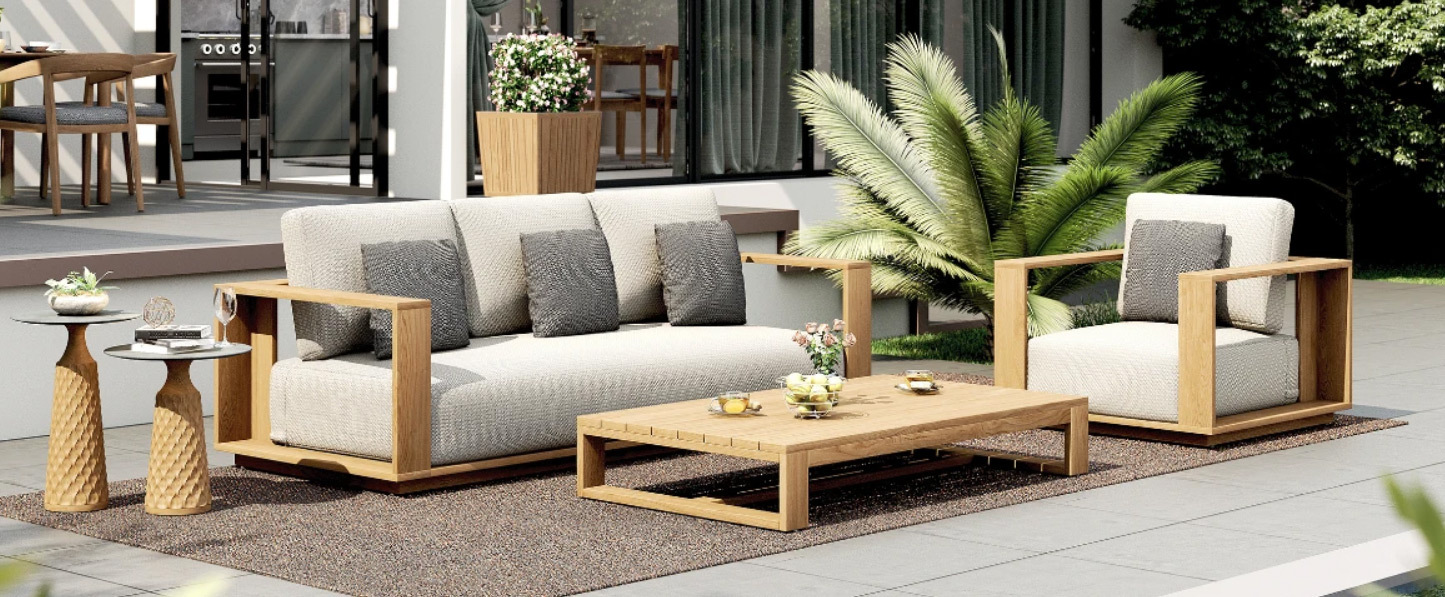
Teak and Reclaimed Teak
Teak is a favourite for outdoor furniture because it has a natural warmth that works just as well on a coastal deck as it does in a city courtyard. It has a rich golden-brown tone when new, although it will slowly weather to a soft silver-grey colour if left outside.
That silver finish is completely normal. Some people like the relaxed, weathered look, while others prefer to maintain the warmer timber colour with the right care products. Neither option is wrong. It simply comes down to the look you prefer.
Reclaimed teak has a little more character from the start. It often has natural variation in the grain, colour and finish, which gives it a more lived-in feel. It suits outdoor spaces where you want the furniture to feel solid, relaxed and less polished.
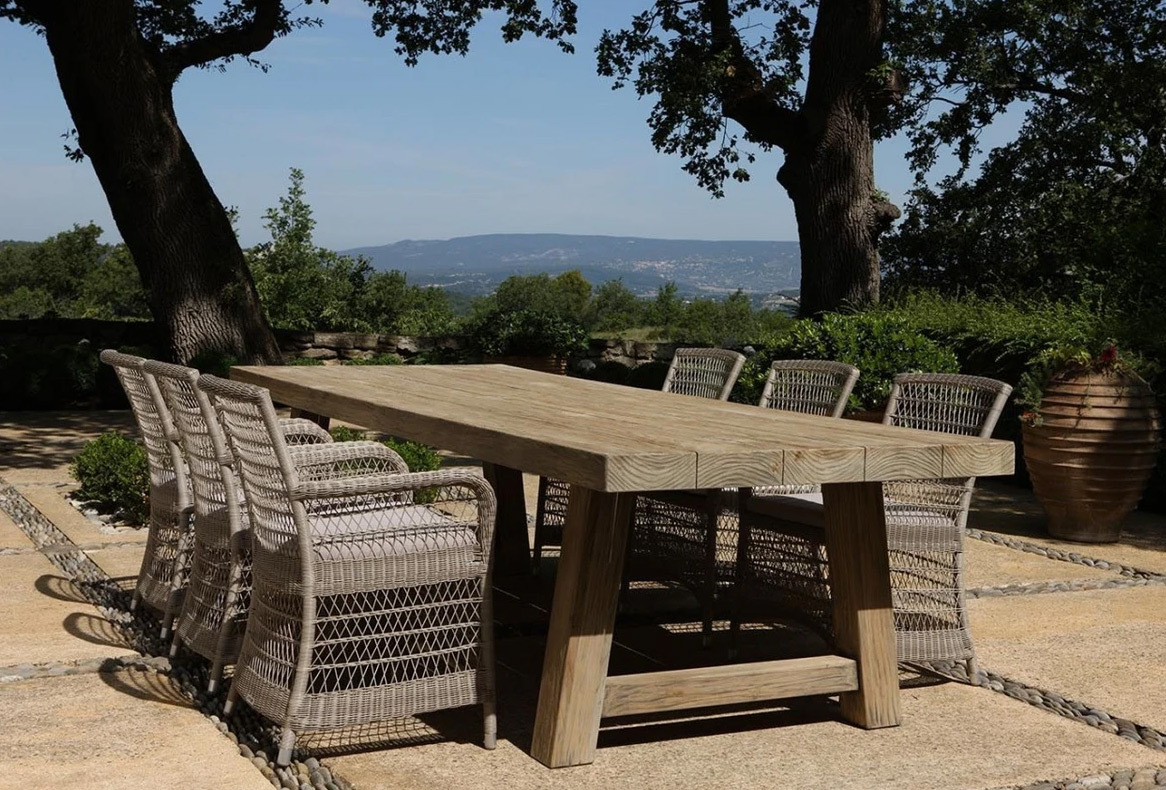
Timber furniture can be heavier than aluminium or wicker, so it is worth thinking about where it will sit before delivery. A large teak table looks great on a spacious deck, but it is not the sort of piece you will want to move every weekend.
Aluminium and Stainless Steel
Aluminium outdoor furniture is a practical choice if you like a lighter, more contemporary style. It is easy to move around, which is useful if you rearrange your outdoor space often or need to bring furniture in during rough weather.
Most aluminium outdoor furniture is powder coated. This gives the frame its colour and creates a hard-wearing finish. It still needs a little care, especially in coastal areas where salt can build up. A regular clean with mild soapy water can make a real difference.
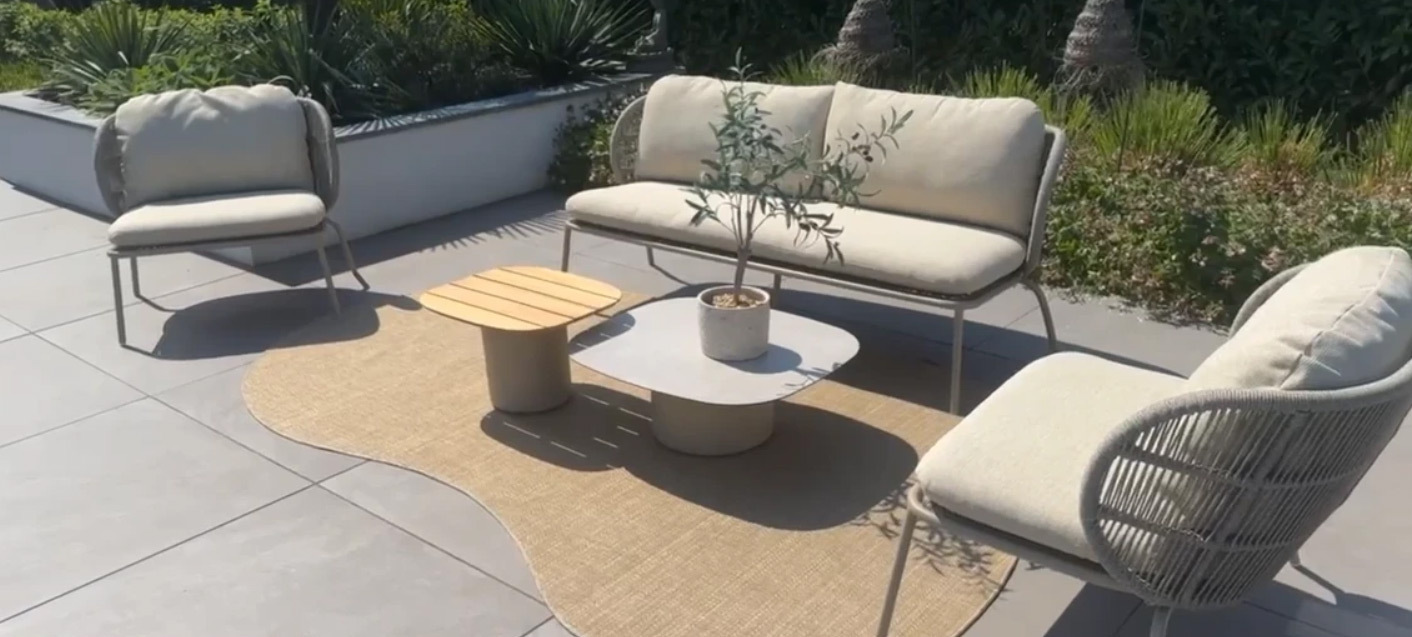
Stainless steel is often used in table legs, frames and hardware. It has a crisp, modern look and works well with timber, ceramic and glass. Like aluminium, it is important to keep it clean and follow the care instructions for the particular product.
Both materials can suit outdoor dining areas, balconies and poolside spaces. The choice often comes down to the look you prefer and how much weight you want the furniture to have.
Wicker, Cane and Outdoor Weave
Wicker furniture brings texture to an outdoor area. It can make a patio or deck feel more relaxed and inviting, especially when paired with soft cushions and timber or aluminium tables.
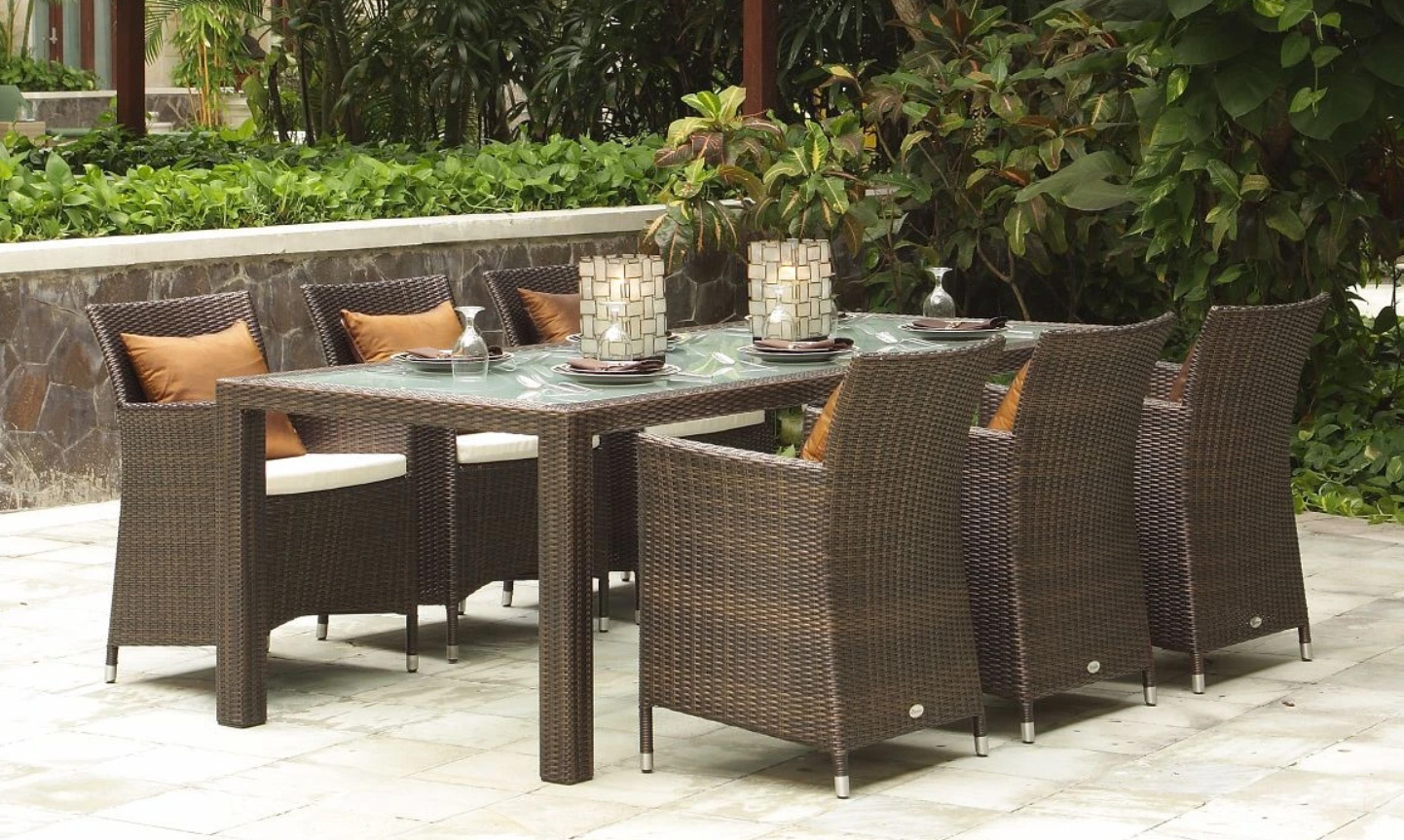
Outdoor wicker is often synthetic rather than natural. This is designed to cope better with outdoor conditions and is commonly woven over a metal frame. It can look similar to natural rattan, but it is usually easier to maintain outside.
Cane and natural rattan have a softer, more organic look. They can work beautifully in covered outdoor spaces, sunrooms and sheltered patios. However, they are not always intended for full exposure to rain and harsh sun, so it is important to check the product’s recommended use.
When looking at woven furniture, pay attention to how the weave feels and how it is attached to the frame. You also want to consider cleaning. Dust, pollen and leaves can settle between the strands, particularly if the furniture sits beneath trees.
Rope, Strap, Mesh and Sling
Rope and strap furniture has become popular because it adds texture without making a space feel heavy. It often has a modern, easy-going look that works well with aluminium or teak frames.
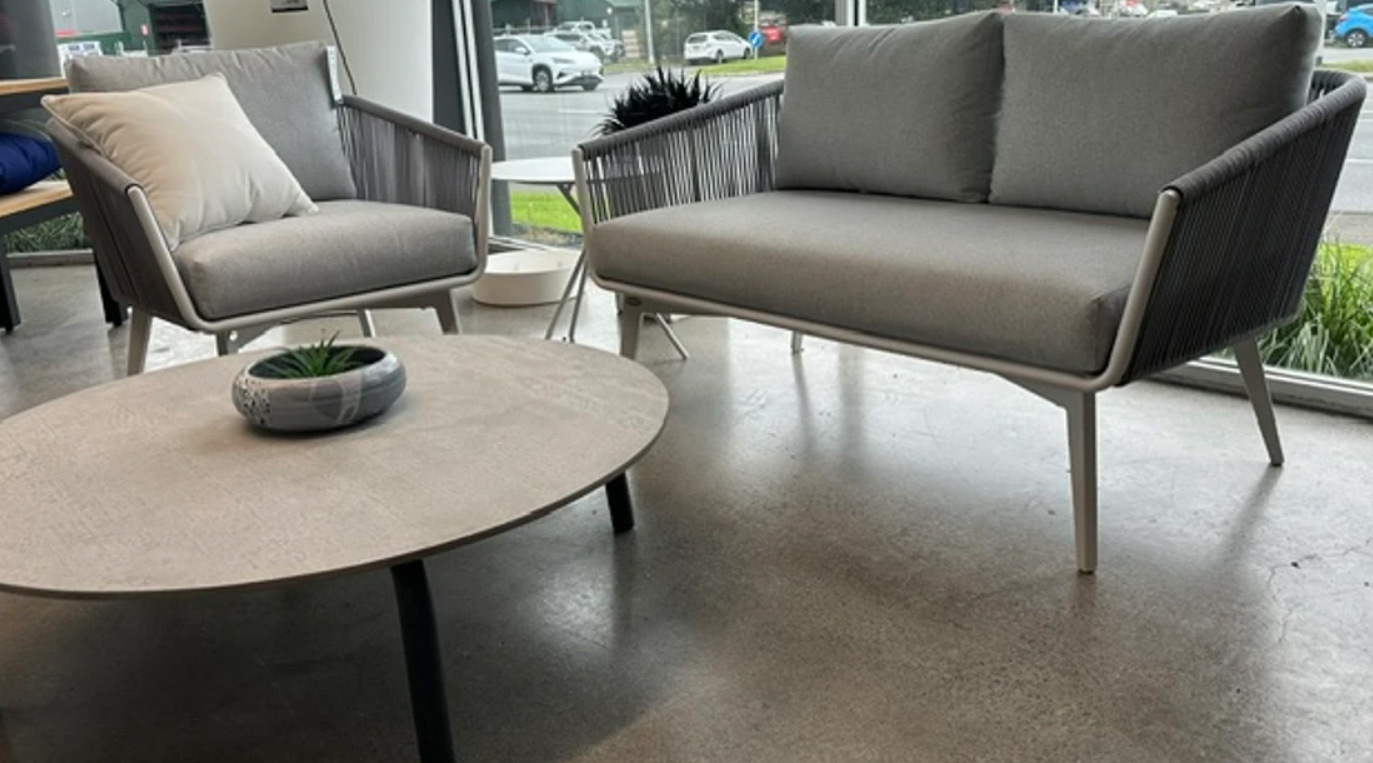
Rope is usually woven around the sides or back of a chair, while straps create wider sections of support. Mesh and sling fabrics are often used on dining chairs and sun loungers because they are breathable and dry fairly quickly after rain.
These materials are a good option if you want furniture that feels light and open. They can work well in sunny areas where you do not want thick cushions on every chair. Just make sure the material is made for outdoor use and that you are comfortable with the care it needs.
Ceramic, HPL, Concrete and Stone Table Tops
The tabletop you choose has a big impact on the overall look of an outdoor setting. It also affects how heavy the table is, how easy it is to move and how it should be cleaned.
Ceramic tops are popular in modern outdoor dining spaces. They are available in a range of colours and finishes, including concrete-look and stone-look styles. They can give a table a more refined feel without needing a full stone surface.
HPL, also known as high-pressure laminate, is another common choice. It comes in a wide range of finishes and is often used for outdoor tables because it is practical and easy to live with. It can give you the look of timber, concrete or stone while keeping the table lighter than the real thing.
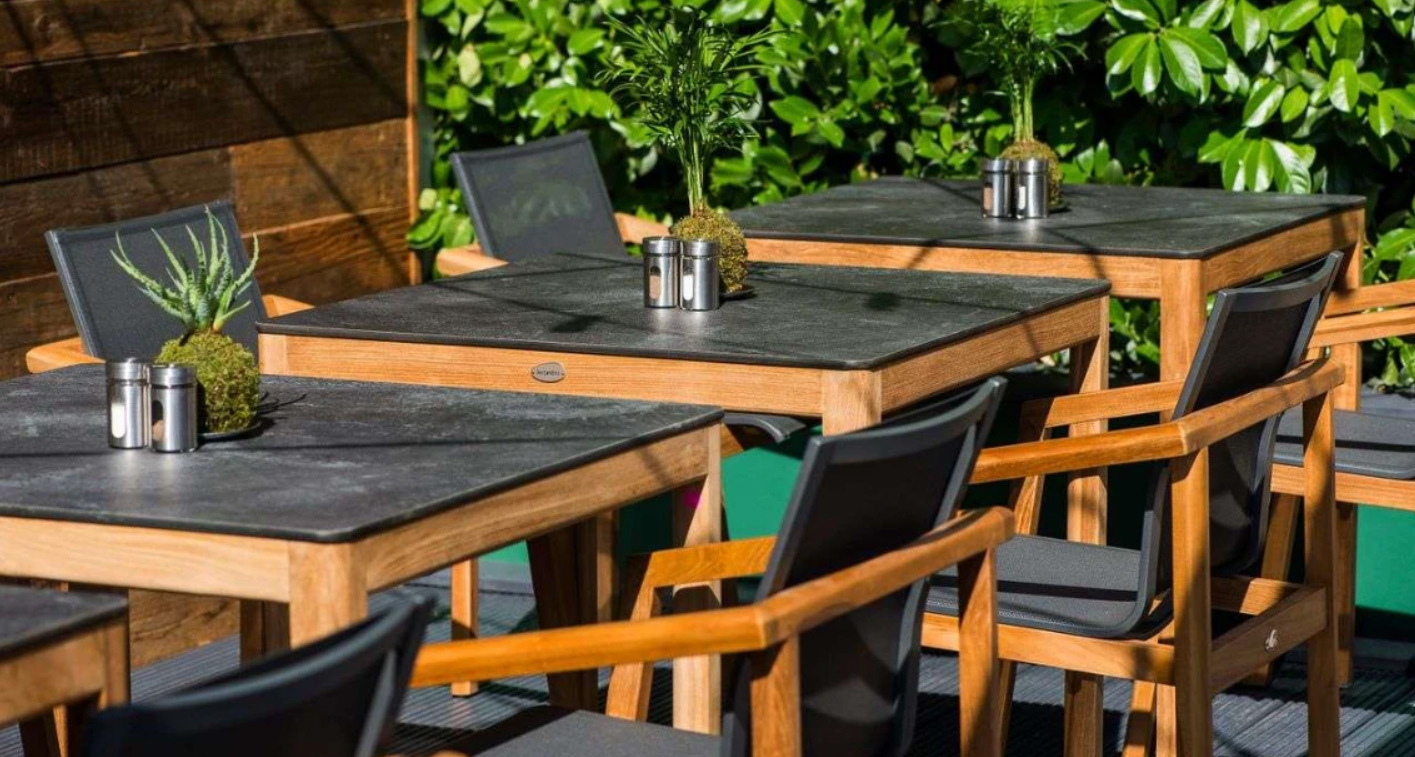
Concrete and stone furniture tend to feel more permanent. They are ideal for larger patios, gardens and areas where you want the furniture to stay in one place. They can be heavier to move, so it is worth thinking about the layout before the furniture arrives.
Outdoor Fabrics and Cushions
Outdoor cushions can completely change how comfortable a lounge setting feels. The fabric, foam and drainage all matter, especially in New Zealand where a sunny morning can turn into a wet afternoon.
Look for fabrics that are designed for outdoor use and check how the cushions should be cleaned and stored. Some covers are removable, while others are intended to be spot cleaned. It is also useful to know whether the foam is quick drying and how long cushions should be left out in wet weather.
Outdoor fabrics like Sunbrella are designed to cope with sun and everyday use, but they still benefit from regular care. Brushing away dust, dealing with spills quickly and storing cushions during long wet periods will help keep them looking their best.
Choosing the Right Material for Your Home
There is no need to use one material throughout the whole outdoor area. Mixing timber, aluminium, rope, ceramic and fabric can make the space feel more personal and less like a matching showroom set.
A sunny, exposed deck may suit lightweight aluminium, weather-ready wicker or furniture that is easy to clean and move. A covered courtyard could be a good place for timber, cane or deeper lounge furniture. A large deck may have room for a solid teak table, while a small balcony may be better with slim frames and stackable chairs.
The main thing is to choose materials that fit the way you want to live outside. If you enjoy the look of natural timber, be comfortable with how it will change over time. If you prefer easy-care furniture, look for finishes that suit your routine. Once you understand what each material offers, it becomes much easier to build an outdoor space that feels right for your home.